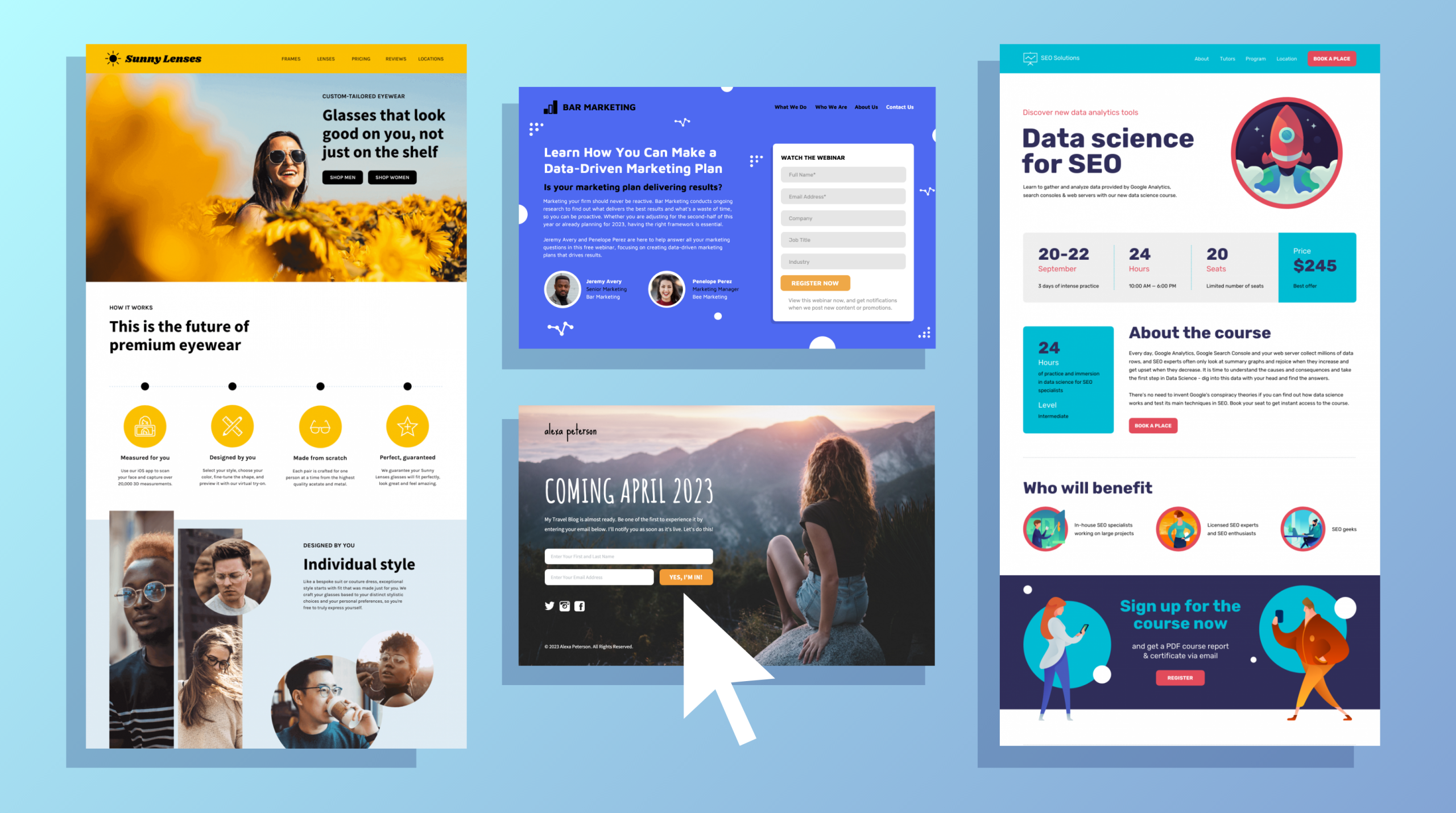
A landing page can be the difference between a visitor leaving your website and becoming a paying customer. Whether you’re collecting email subscribers, promoting a product, or generating leads, a well-designed landing page can significantly improve your conversion rates.
But creating a landing page isn’t just about making it look attractive. It needs to communicate value, build trust, and encourage visitors to take action.
In this guide, you’ll learn how to create high-converting landing pages that turn more visitors into customers.
What Is a Landing Page?
A landing page is a standalone web page created for a specific marketing campaign or goal. Unlike your homepage, a landing page focuses on one objective, such as:
- Collecting email subscribers
- Selling a product
- Promoting a service
- Registering users for a webinar
- Offering a free download
- Generating business leads
Every element on the page should guide visitors toward completing that single goal.
Why Landing Pages Matter
Businesses use landing pages because they:
- Increase conversion rates
- Generate qualified leads
- Improve advertising performance
- Support email marketing campaigns
- Reduce distractions
- Help measure campaign success
Instead of sending visitors to a general homepage, a dedicated landing page provides a focused experience that encourages action.
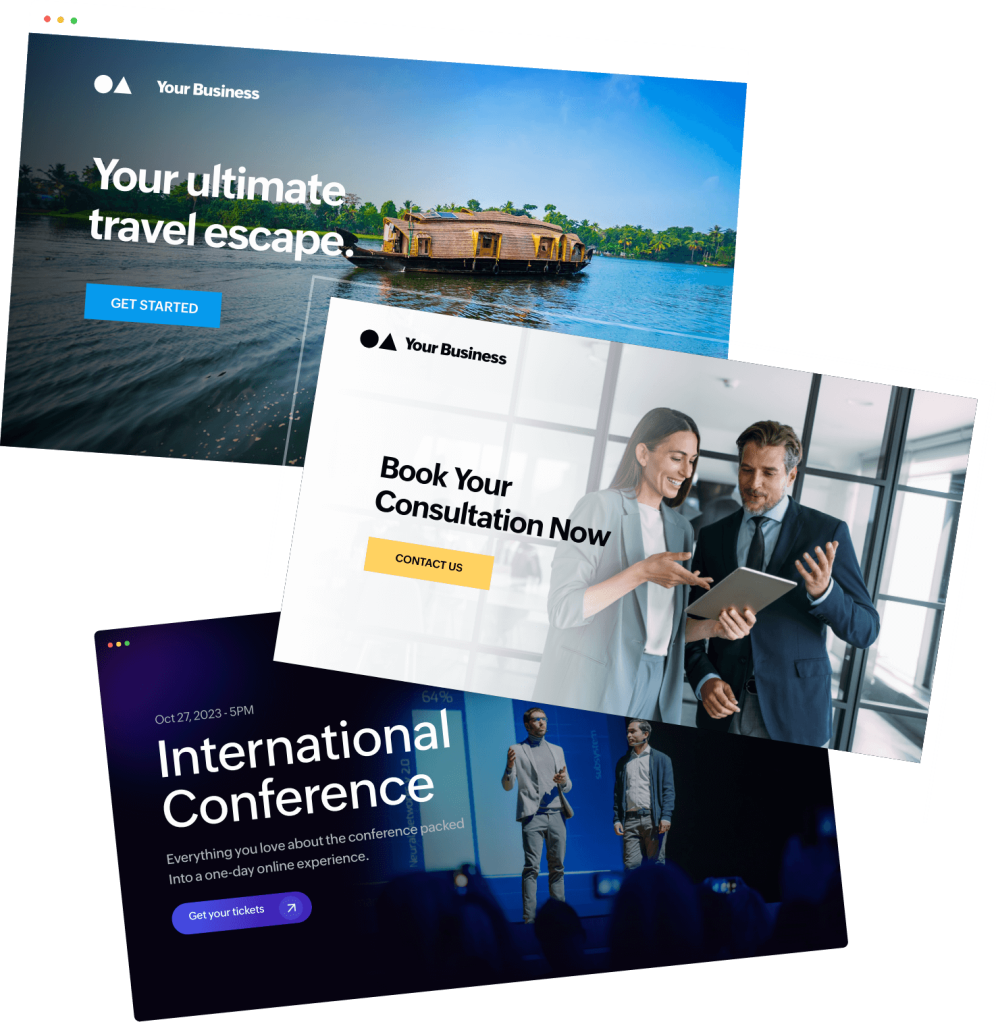
Step 1: Define Your Goal
Before designing your landing page, decide exactly what you want visitors to do.
Examples include:
- Buy a product
- Book a consultation
- Join your email list
- Download an eBook
- Start a free trial
- Request a quote
A clear goal helps you create a page that supports one specific action.
Step 2: Know Your Audience
Your landing page should speak directly to your ideal customer.
Ask yourself:
- What problem are they trying to solve?
- What questions might they have?
- What objections could prevent them from converting?
- What outcome are they looking for?
Understanding your audience allows you to write more persuasive copy.
Step 3: Write a Strong Headline
Your headline is the first thing visitors see.
A good headline should:
- Grab attention
- Explain the main benefit
- Be clear and specific
- Encourage visitors to keep reading
Example
Instead of:
“Welcome to Our Website”
Try:
“Grow Your Email List Faster with Easy-to-Use Marketing Automation”
Focus on the value your audience will receive.
Step 4: Add a Compelling Subheadline
The subheadline should support your main headline by providing additional information.
For example:
“Create automated email campaigns, capture more leads, and increase sales—all from one simple platform.”
This reinforces the promise made in the headline.
Step 5: Highlight the Benefits
Many businesses spend too much time listing features instead of explaining benefits.
Features
- Marketing automation
- Drag-and-drop builder
- Email templates
Benefits
- Save hours every week
- Grow your email list faster
- Increase customer engagement
- Improve conversion rates
Visitors are more interested in how your offer improves their lives.
Step 6: Use High-Quality Visuals
Images and videos help visitors understand your product or service.
Include:
- Product screenshots
- Demonstration videos
- Before-and-after examples
- Professional graphics
- Illustrations
Choose visuals that support your message rather than distract from it.
Step 7: Create a Strong Call-to-Action (CTA)
Your CTA tells visitors what to do next.
Effective CTA buttons include:
- Get Started
- Start Free Trial
- Download Now
- Claim Your Discount
- Join Today
- Book a Demo
Use clear, action-oriented language.
Step 8: Reduce Distractions
High-converting landing pages keep visitors focused.
Avoid:
- Too many navigation links
- Unnecessary pop-ups
- Multiple offers
- Long blocks of text
- Irrelevant information
A clean layout helps guide visitors toward your CTA.
Step 9: Build Trust
People are more likely to convert when they trust your business.
Add credibility with:
- Customer testimonials
- Product reviews
- Case studies
- Trust badges
- Money-back guarantees
- Security certificates
- Client logos
Social proof reassures visitors that others have had positive experiences.
Step 10: Optimize for Mobile Devices
Many visitors browse on smartphones and tablets.
Your landing page should:
- Load quickly
- Display correctly on smaller screens
- Use readable text
- Have large, tappable buttons
- Keep forms simple
A mobile-friendly design improves both user experience and conversions.
Step 11: Improve Page Speed
Slow pages can cause visitors to leave before they even see your offer.
To improve loading speed:
- Compress images
- Minimize unnecessary scripts
- Use reliable web hosting
- Enable caching
- Optimize your website’s code
Faster pages often lead to better engagement.
Step 12: Test and Improve
Even great landing pages can perform better over time.
Experiment with:
- Headlines
- CTA button text
- Button placement
- Images
- Colors
- Forms
- Testimonials
A/B testing allows you to compare different versions and make data-driven improvements.
Common Landing Page Mistakes
Avoid these common errors:
- Weak headlines
- Too much text
- Multiple calls-to-action
- Slow loading speed
- Poor mobile experience
- Asking for too much information in forms
- Lack of trust signals
- Unclear value proposition
Keeping your page focused and user-friendly can make a significant difference.
Best Tools for Creating Landing Pages
Several platforms make it easy to build professional landing pages:
- Leadpages
- Unbounce
- Instapage
- Elementor
- WordPress
- HubSpot
- ConvertKit
- Brevo
- Mailchimp
Choose a tool that fits your budget, technical skills, and marketing goals.
Final Thoughts
A high-converting landing page isn’t about flashy designs or clever slogans—it’s about understanding your audience and guiding them toward one clear action.
Start with a compelling headline, highlight the benefits of your offer, use persuasive calls-to-action, build trust with testimonials, and optimize for speed and mobile devices. Finally, continue testing and refining your page to improve results over time.
By following these best practices, you can create landing pages that not only attract visitors but also convert them into loyal customers.
Frequently Asked Questions
What is the purpose of a landing page?
A landing page is designed to encourage visitors to complete a specific action, such as making a purchase, signing up for a newsletter, or requesting a quote.
What makes a landing page convert well?
Clear messaging, a strong value proposition, persuasive calls-to-action, trust signals, fast loading times, and a mobile-friendly design all contribute to higher conversion rates.
Should a landing page have navigation links?
In many cases, limiting navigation helps reduce distractions and keeps visitors focused on the primary goal of the page.
How can I improve my landing page conversion rate?
Regularly test different headlines, images, CTA buttons, layouts, and forms. Even small changes can lead to meaningful improvements in performance over time.